How Long Does Custom Cabinet Production Take? A Stage-by-Stage Guide
- Share
- Issue Time
- Oct 12,2026
Summary
Custom cabinet lead time depends on design approval, finish complexity, site data and destination rather than a single factory number. Here is every production stage in order, what extends your schedule, and how to keep it short.
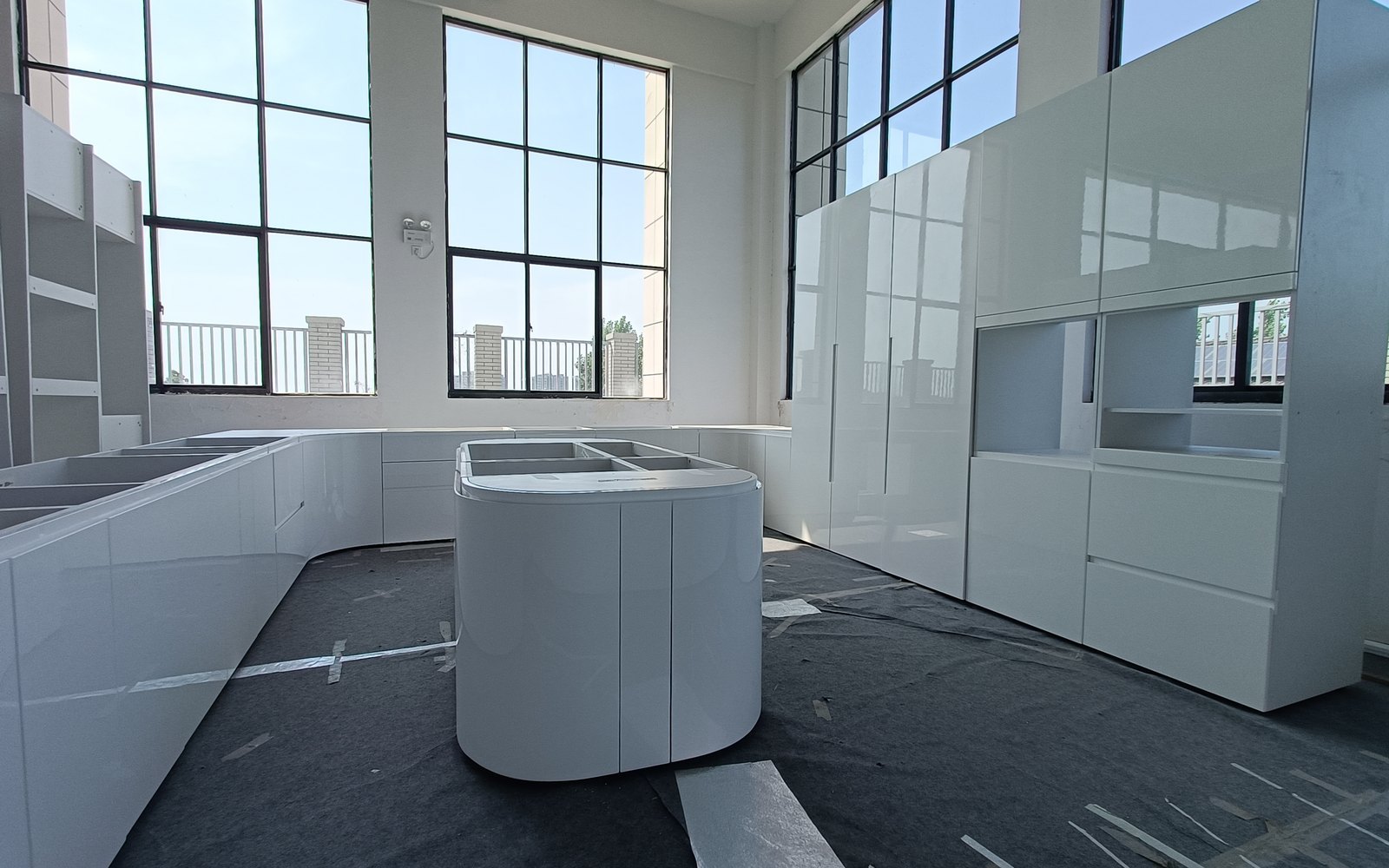
Custom cabinet production starts only after the drawings and finishes are approved, then moves through cutting, edge-banding, finishing, inspection and packing before it is consolidated for shipping. ZoneIdeal confirms a project-specific timeline rather than a generic number, because total lead time depends on the scale of the project, the finish specification and the destination port rather than on the factory alone.
Why There Is No Single Number for Custom Cabinets
Ask five custom cabinet makers for a lead time and you will get five answers, because the honest answer depends on inputs that differ per project. A wardrobe in one finish with standard hardware and a whole-house package with three door profiles, veneer accents and integrated lighting are not the same job, even if both are called "custom".
At ZoneIdeal, total lead time is quoted per project. What we can show you is exactly which stages sit on the critical path, so you can see where your decisions shorten or extend the calendar.
The Stages, In Order
1. Design and technical review
Your dimensions, photos or drawings are turned into a 2D layout and a 3D preview. Door profiles, carcass material, finish and internal storage are selected here. Nothing goes to the factory before this is signed off, because a late change after cutting is the single most expensive delay in custom work.
Before the drawings are finalised, our design and technical teams carry out a second review of every drawing detail — checking that each detail is designed sensibly, that the functional hardware suits the way the space will actually be used, and whether there is still room to optimise the layout.
Installation and design detail are worked out at the drawing stage, not corrected on site. A good custom cabinet project is designed: the site is where the design is proven, never where it is invented.
2. Manufacturing
Before the first panel is cut, plumbing, wiring and smart-home layouts are overlaid onto the manufacturing files after technical briefings with your contractor, electrician and HVAC team, so socket, LED and appliance cut-outs are routed on our production line rather than hand-cut on site.
Panels are then cut, drilled and edge-banded with laser sealing, then finished. This is the stage most affected by specification: paint finishes, veneer matching and non-standard sizes all take longer than a single flat colour in a uniform size.
3. Inspection and packing
Eight inspection stages run from raw panel to final pack: surface checks for scratches, dents, chips and delamination, millimetre-level dimensional verification against the drawings, colour and grain matching under standardised lighting, functional testing of hinges and soft-close slides, and a full accessory count. Every panel is individually labelled and barcoded for traceability.
4. Consolidation and shipping
Goods are consolidated and loaded into the container as one shipment, with video inspection provided for every order and third-party inspection welcomed. Sea freight duration then depends on your destination port.
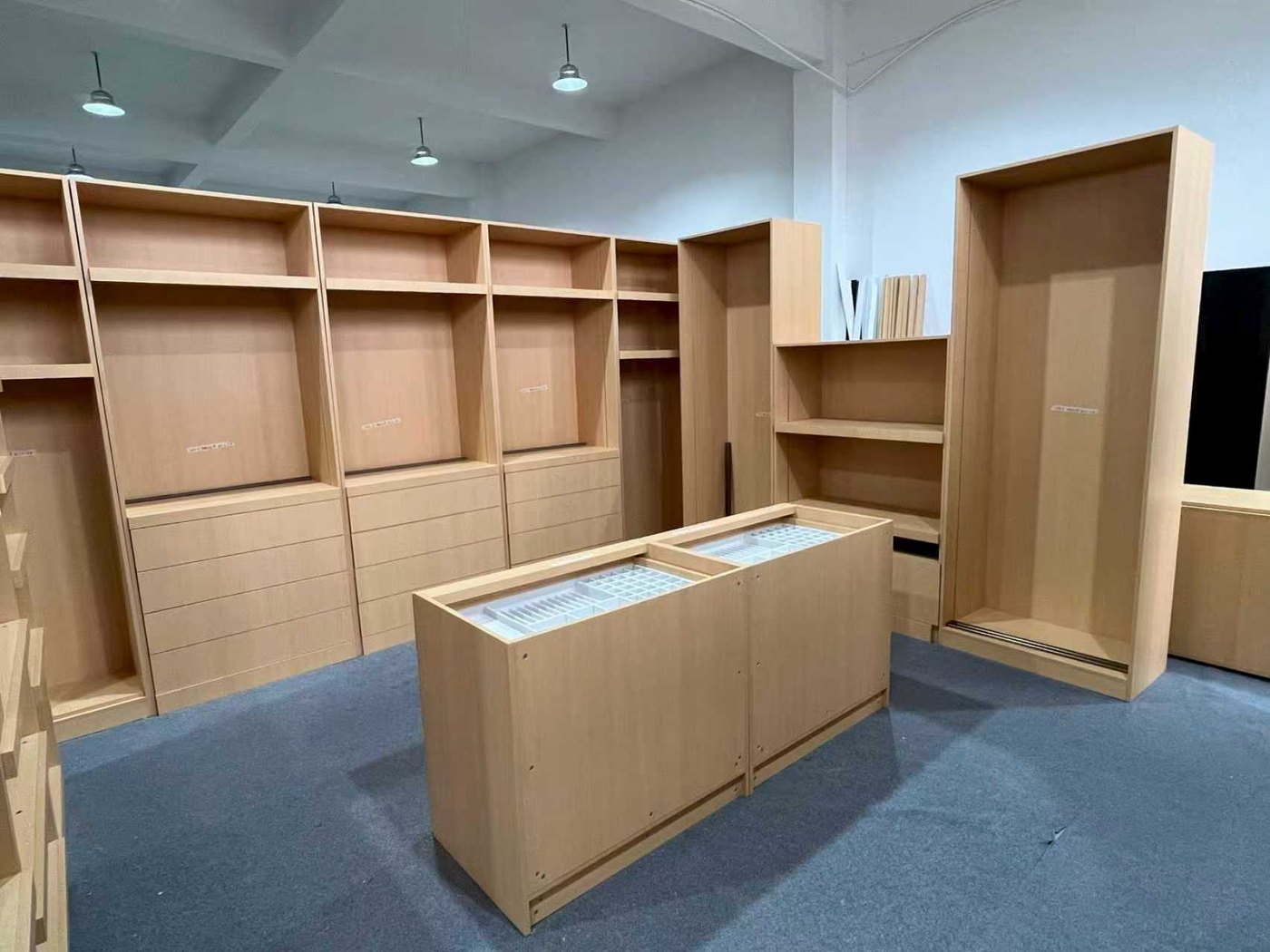
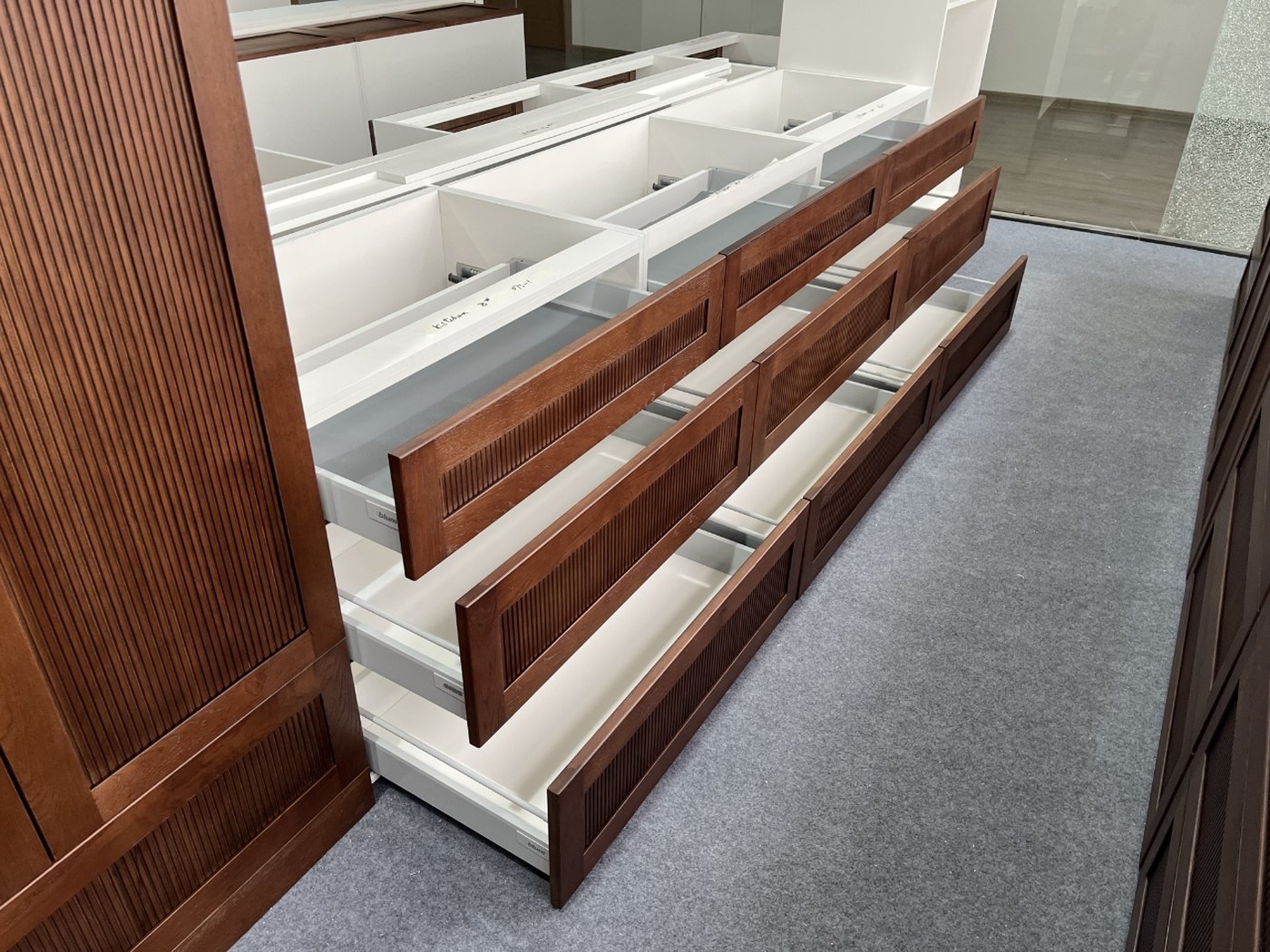
Every photograph in this article shows ZoneIdeal cabinetry — real orders from our production floor and finished projects, not stock imagery.
What Actually Extends Your Timeline
| Factor | What it does to your schedule | How to keep it short |
|---|---|---|
| Late changes to drawings | Forces re-cutting and can move a project back to the start of the queue | Approve the 3D layout and finishes before production release |
| Finish complexity | Paint, veneer grain matching and multi-colour layouts take longer than a uniform flat finish | Lock finishes early; use standard finish ranges where time matters |
| Site data quality | Missing wall, ceiling or service positions cause rework after production | Send room photos, sketch plans or a laser-scanned layout at the design stage |
| Destination and freight mode | Port congestion and inland transport vary widely by country | Confirm the port and Incoterm with us when the order is placed |
| Peak-season loading | Container space and factory slots tighten in busy months | Place container-scale orders early and consolidate rooms into one shipment |
Installation days are not production days. ZoneIdeal pre-installs a coding system into the cabinetry that raises installation efficiency by 40%, saving installers 1–2 days on site. Time saved at the wall often matters more than a week saved at the factory, and it is not lost to hidden defects.
Faster Is Possible, but It Is Not the Same as Better
The most common cause of a delayed custom kitchen is not a slow factory, it is a project that reached production before it was ready. ZoneIdeal's design team deliberately spends around half of its effort on installation feasibility: weight distribution, material limits and clearance are checked, and site deviations are mapped by laser so that adjustable filler pieces can absorb uneven walls and floors. That work happens before cutting, which is why it protects the calendar rather than extending it.
Common Questions
Can I get a firm production and shipping schedule before paying?
Yes. Share your drawings or layout and we will come back with an executable solution and a clear quotation; the schedule is confirmed against your real specification rather than a marketing average. Start from the design and budget page.
Does shipping count as production time?
No, they are separate. Manufacturing finishes at packing; ocean transit follows. Both are quoted together so you can plan installation and trades around one date.
What if my site measurements change after the order?
Tell us before production release. After that point, adjustments are handled the way any custom change is: with new drawings, a revised schedule and the corresponding cost. This is exactly why the design approval step exists.
The reliable answer to "how long" is a schedule built around your project, not an industry average. Send your layout, finish choice and destination, and our team will confirm the timeline with you for your specific project.