Cabinet Door Finishes Compared: Lacquer, Melamine, Wood Veneer, Timber and PET
- Share
- Issue Time
- Nov 4,2026
Summary
Lacquer for colour freedom, melamine laminate for everyday forgiveness, wood veneer for real grain, PET for moisture and knocks, stainless steel for utility zones. What to choose by room, and where a finish usually fails.
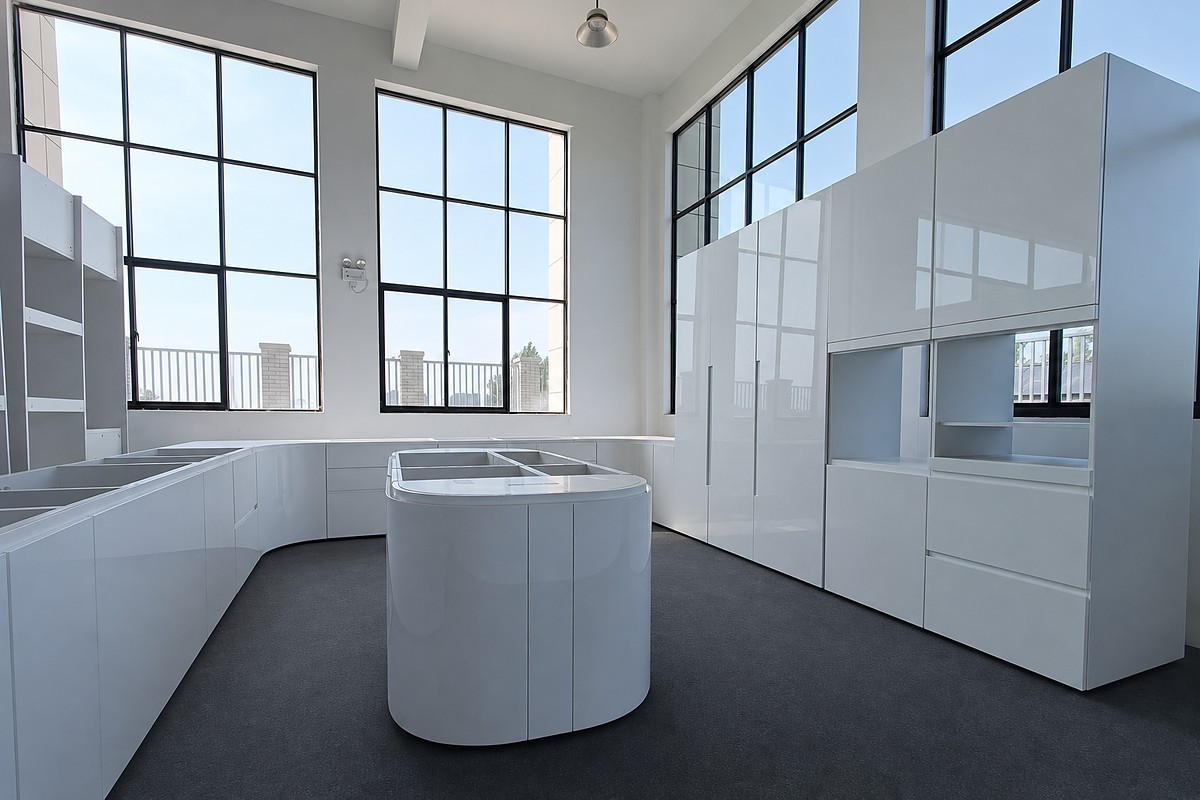
Cabinet door finish is a choice between three things: the look you want, how much wear the room produces, and how you are willing to clean it. Lacquer gives the most colour freedom, melamine laminate is the most forgiving day to day, timber and wood veneer add real grain, and PET takes knocks and moisture — ZoneIdeal specifies all five, with water-based coatings on lacquered and veneered fronts.
The Five Finishes, Compared
| Finish | What it is | Look | Best suited to |
|---|---|---|---|
| Lacquer (painted) | Sprayed coating over a prepared panel, finished matte or glossy | Uniform, seamless colour; handleless and flat-front designs | Statement kitchens, integrated appliance walls, colour-matched interiors |
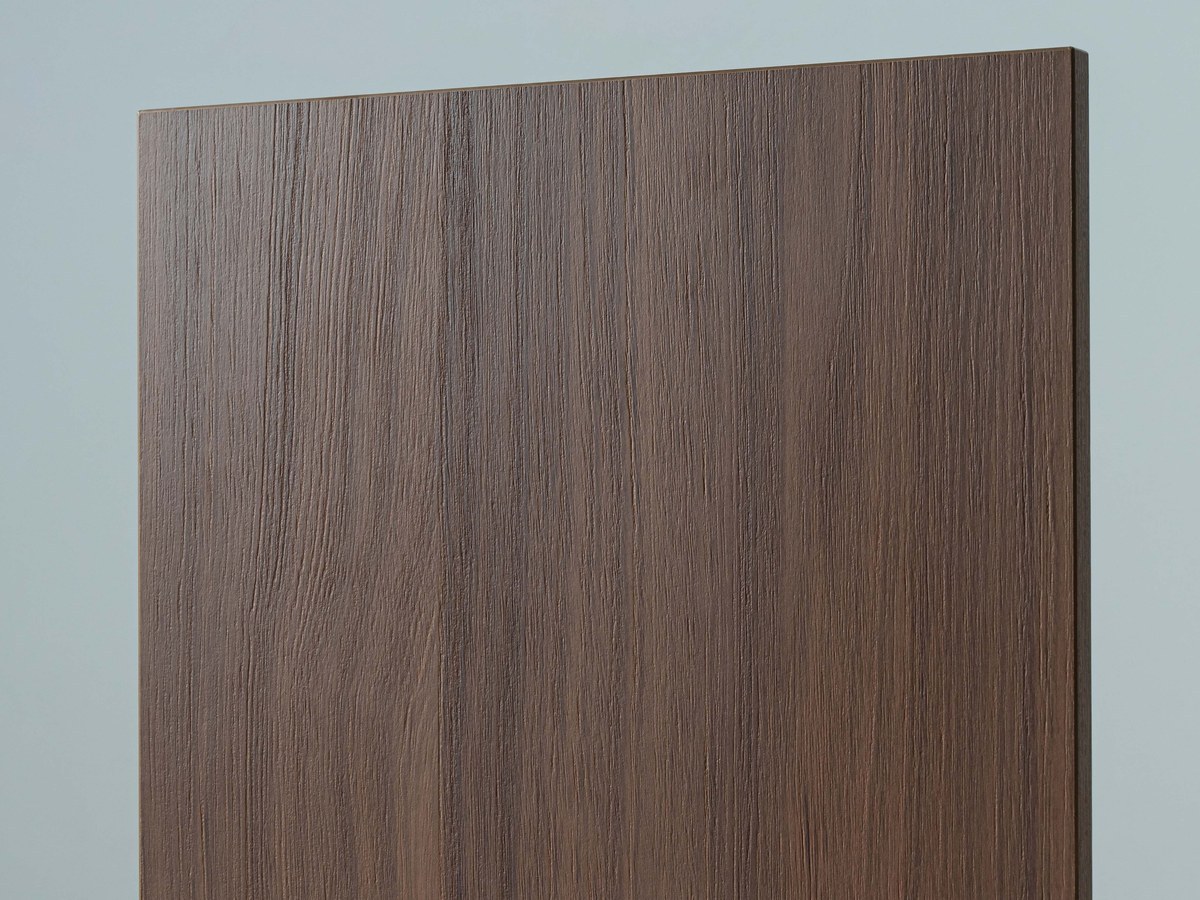
| Melamine laminate | Decorative paper layer bonded to a panel face | Consistent, clean surfaces including convincing wood tones | Family kitchens, rental and budget-led projects, wipe-down heavy spaces |
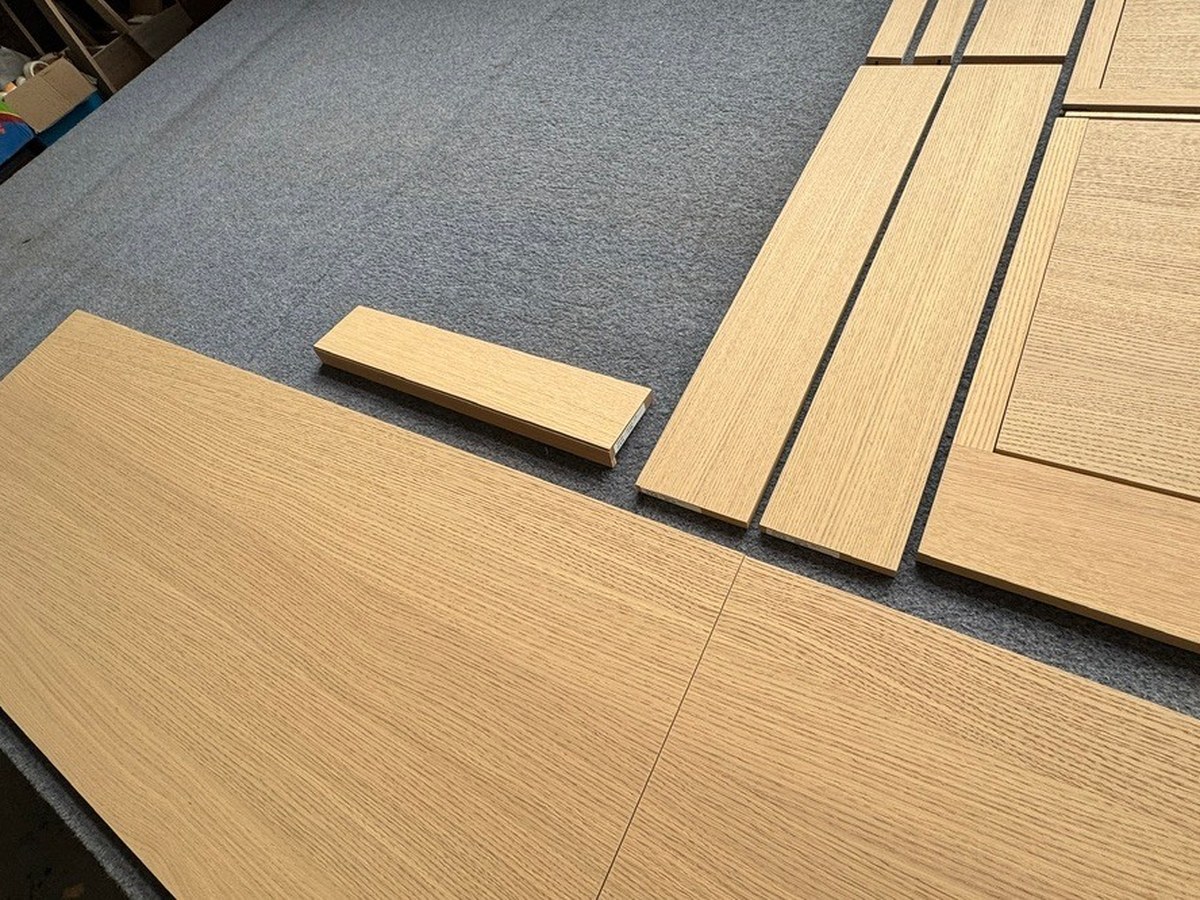
| Wood veneer | A thin slice of real timber applied to the panel | Genuine grain and variation, warm and architectural | Studies, living rooms, premium kitchens wanting natural texture |
| Solid timber | Solid wood components for doors and frames | Substantial, tactile, classic detailing such as raised panels | Traditional and French-style kitchens, moulded profiles |
| PET | Polymer film-faced panel, matte or gloss | Smooth and contemporary; strong colour purity | Modern kitchens, wet-adjacent cabinetry, high-traffic door fronts |
Choosing by Room, Not by Trend
- Kitchen: the room with the highest combination of grease, steam and knocks. Melamine laminate and PET handle that routine best; lacquer gives the strongest design result if you accept gentler handling around the sink and hob.
- Bathroom and laundry: prioritise sealed edges and moisture-tolerant faces. PET is the natural pick, with the same attention to edge sealing as the panel itself.
- Study, living room and wardrobe: lower wear, so this is where grain and texture can lead. Wood veneer and solid timber age well and are rarely exposed to water.
- Children's rooms and family homes: cleaning effort matters more than gloss level. A finish you can wipe with a soft cloth and mild soap will be maintained; a delicate one will not.
Where a Finish Usually Fails
Almost no door finish fails in the middle of the panel. It fails at the edge, at the handle fixing, or at a cut-out. That is why the production details matter as much as the surface:
- Edge sealing. ZoneIdeal uses high-precision laser edge-banding that creates a continuous physical seal around every exposed panel core, blocking moisture penetration and keeping particles locked inside the board.
- Adhesive system. Edge-banding uses PUR hot-melt adhesives, eliminating heavy metals and harmful chemical off-gassing at the glue line.
- Coating chemistry. Lacquered and veneered finishes are built on water-based coatings and zero-VOC finish technologies rather than solvent-heavy systems.
- Colour consistency. ZoneIdeal checks door fronts and side panels side by side under standardised lighting so that grain direction and tone stay consistent across the whole room, not just within one batch.
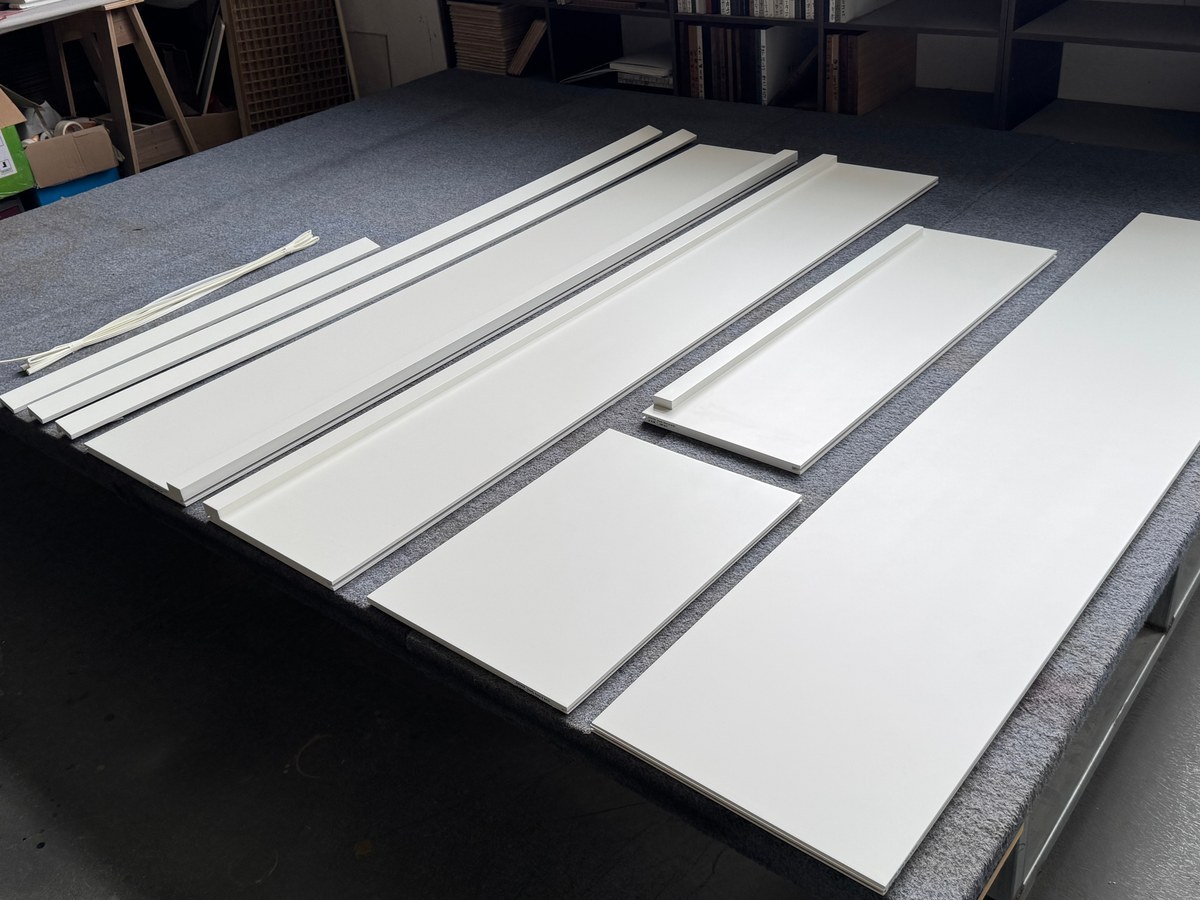
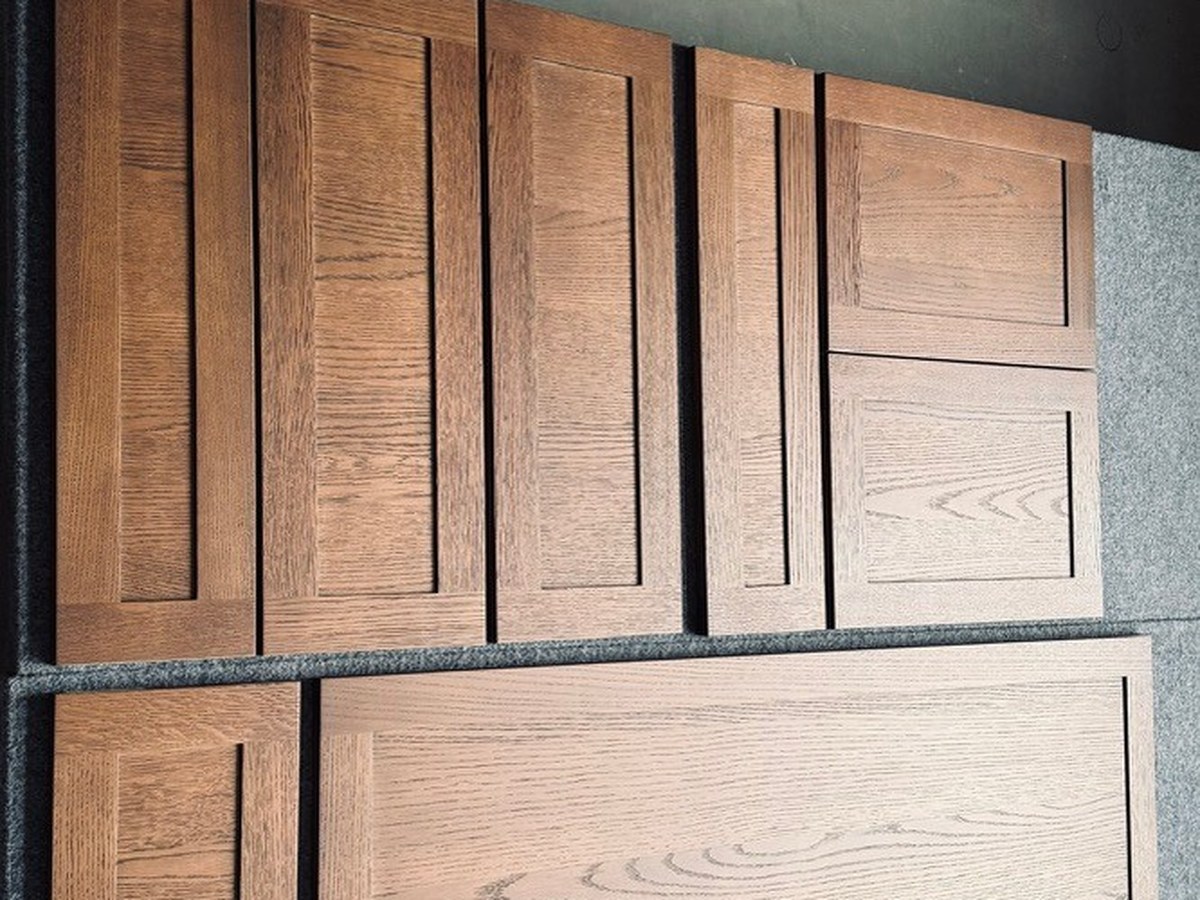
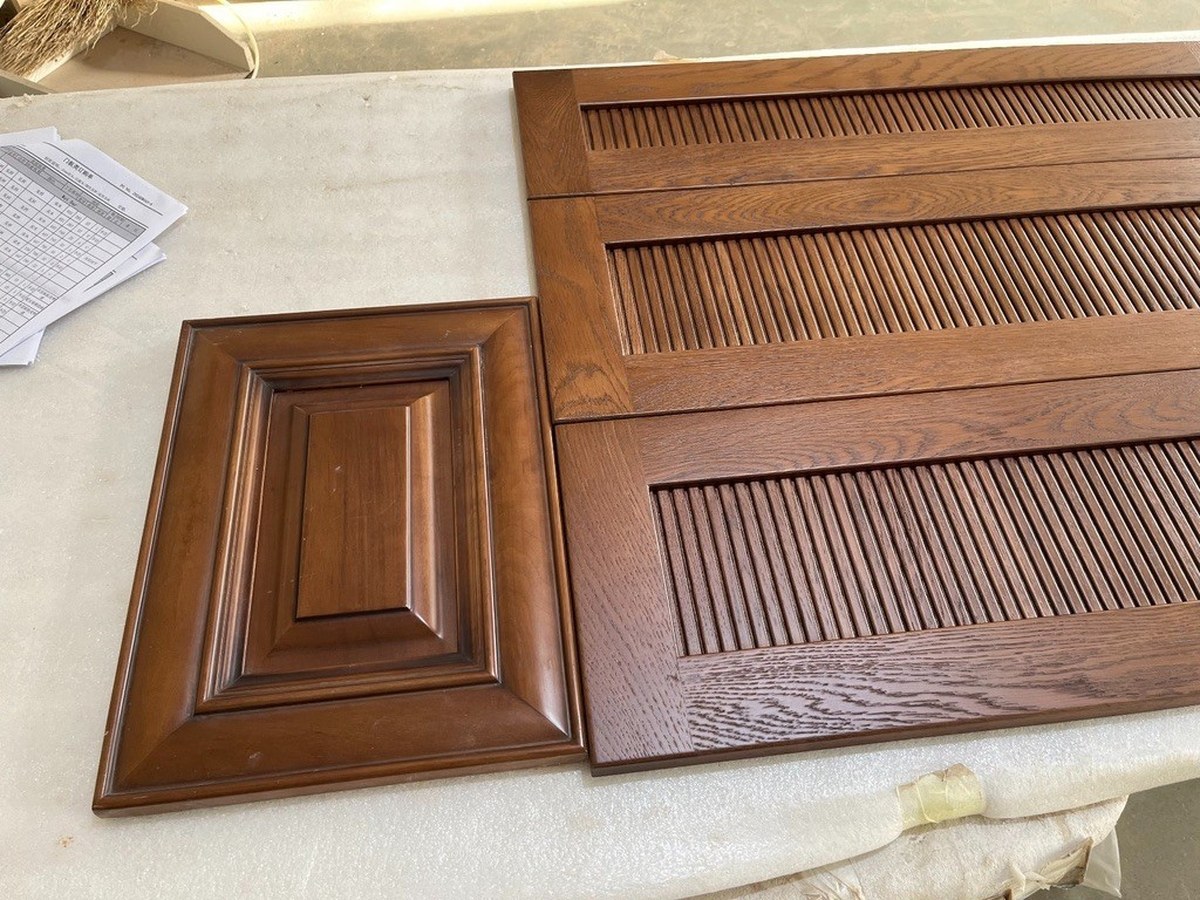
Finishes set the look; hardware decides the feel. Door front choice is what you photograph. Hinges, soft-close slides and lift-up mechanisms are what you touch several times a day, which is why every unit is functionally tested before packing and the hardware runs on a 5-year warranty covering hinge and slide performance.
Common Questions
Are matte finishes harder to keep clean than gloss?
Matte surfaces show fingerprints less but can hold a mark longer if wiped with an abrasive cloth; gloss reflects more light but highlights streaks. In both cases the practical rule is a soft cloth with mild soap rather than a spray-and-scrub habit.
Can I mix finishes in one kitchen?
Yes, and it is often the strongest design decision: a durable workhorse finish on base cabinets and a more expressive one on wall or island fronts. Colour and grain matching is checked during inspection so mixed finishes still read as one scheme. Browse the options in the kitchen solutions and closet solutions sections.
Do finishes change the warranty?
Surface finishes are covered by ZoneIdeal's 5-year quality warranty for custom cabinetry, alongside structural integrity and hardware performance. Damage from accidental impact or daily wear has its own no-quibble replacement commitment rather than being treated as an argument about fault.
Pick the finish for the room's daily reality first and for the mood board second. Then check the two things you cannot see in a sample: how the edges are sealed and what the coating is made of.